
We are expanding our sustainability practices in all stages of our value chain through risk management, evaluation processes, audits and uninterrupted communication activities.
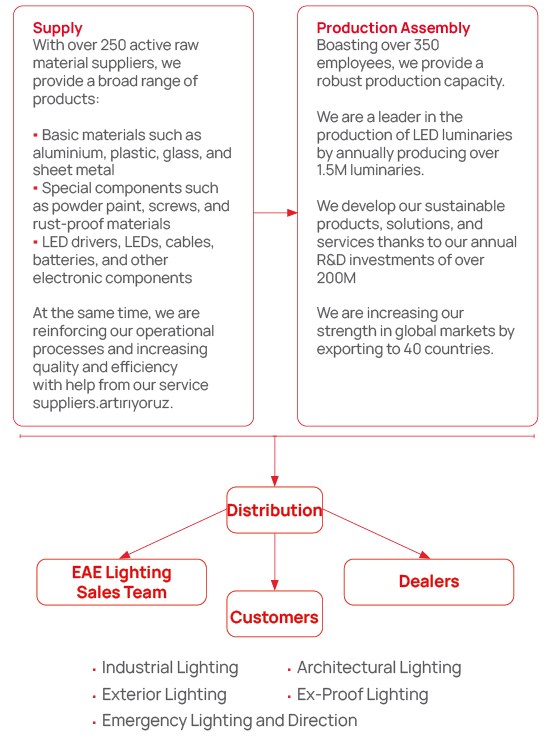
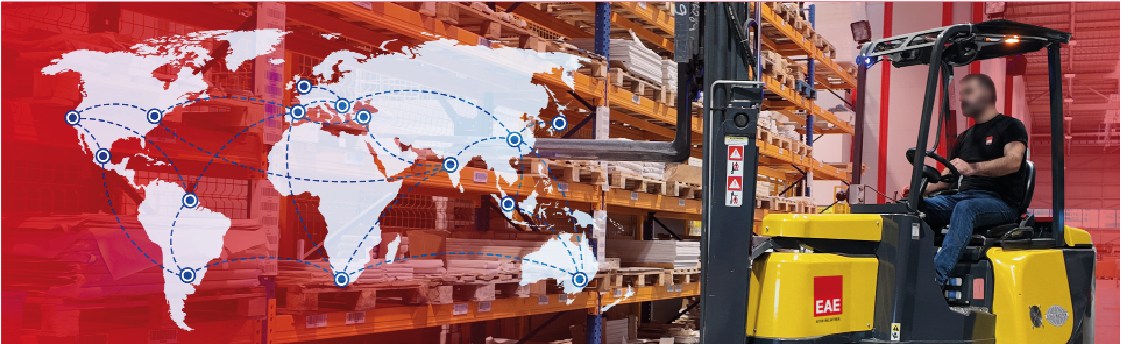
In line with our principle of responsible purchasing, we have completed our preparations for the integration of environmental and social factors into supplier performance evaluation processes. In 2024, we released our Responsible Purchasing and Supply Chain Policy through which we aim to make sure that all the products and services supplied are in compliance with our sustainability vision, in addition to encouraging and evaluating our suppliers accordingly.
At EAE Group, we evaluate the environmental, social, and governance risks of our suppliers through the EcoVadis ESG Rating System. In this respect, we ask our suppliers to provide their Ecovadis registration status and scores, and plan to determine their current status through supplier audits.
This evaluation includes certain sustainability criteria such as energy consumption, water use, biodiversity, waste management, occupational safety, and human rights. At EAE Lighting, we completed the survey inputs into the EcoVadis ESG Rating System for the first time in 2024 and expect to share our 2024 score in our 2025 report.
We plan to increase the weight of the sustainability factor in our supplier evaluation criteria from its current level of 10% to 25% by 2030 with the aim of performing sustainability-focused evaluations throughout our entire supply chain. We expect our suppliers to calculate their greenhouse gas emissions and engage in emissions reduction activities. In 2024, we started to request our suppliers to establish an Environmental Management System to reduce their environmental impacts, obtain ISO and other quality certifications, act in accordance with the net-zero emissions goal, and initiate intensive work on issues including natural resource efficiency, energy use, and chemicals management.
We also plan to more closely monitor potential risks that may result from minerals in the supply chain, including tin, tungsten, tantalum, gold and cobalt, by using the Conflict Minerals Reporting Template and the Cobalt Reporting Template provided by the Responsible Minerals Initiative.