

Prioritisation Analysis
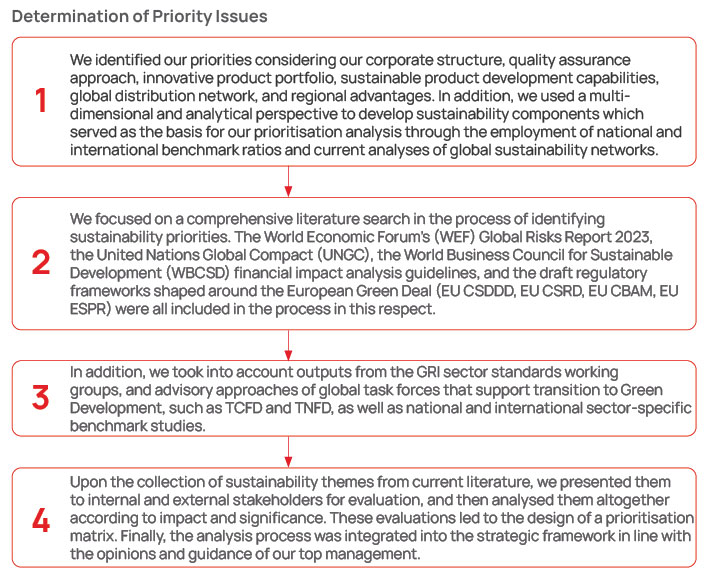
As sustainability transformation increases in importance in our sector with each passing day, it has now become an inevitable requirement across the globe. In response to this transformation, we identified our sustainability priorities in 2022 and reviewed them in 2023 in accordance with the principle of duty of care by taking into account our economic, environmental, social, and governance impacts on all our stakeholders, following the lead of the GRI 2021 Standards and the EU Directive on Corporate Sustainability Reporting (CSRD) draft guidelines. As for our 2024 operations, these have been shaped around our priority issues.
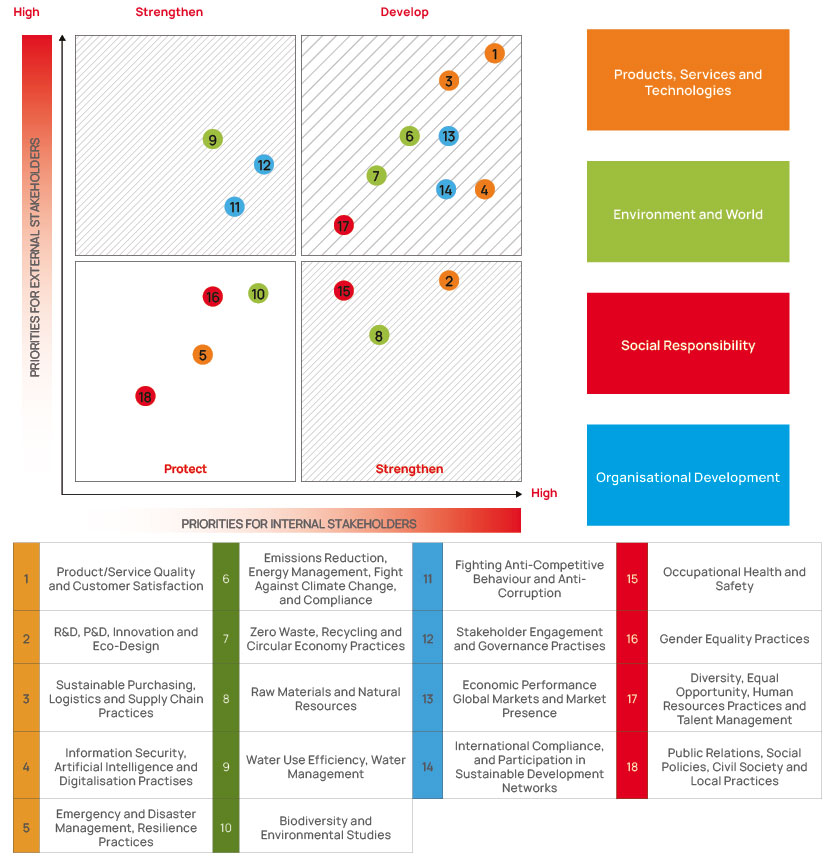
Very High Priority Issues
Sustainability Impact Area
Products, Services and Technologies
- Product Quality and Customer Satisfaction
- Sustainable Purchasing, Logistics and Supply Chain Practices
- Information Security, Artificial Intelligence and Digitalisation Practises
We focus on the following UN Sustainable Development Goals as part of our priority issues:

Sustainability Impact Area
Environment and World
- Emissions Reduction, Energy Management, Fight Against Climate Change, and Compliance
- Zero Waste, Recycling and Circularity Practices
We focus on the following UN Sustainable Development Goals as part of our priority issues:

Sustainability Impact Area
Products, Services and Technologies
- Economic Performance, Global Markets and Market Presence
- International Compliance and Participation in Sustainable Development Networks
We focus on the following UN Sustainable Development Goals as part of our priority issues:

Sustainability Impact Area
Social Responsibility
- Diversity, Equal Opportunity, Human Rights, Human Resources Practices and Talent Management
We focus on the following UN Sustainable Development Goals as part of our priority issues:
