
Strategic Risks and Opportunities Task Force

- INTRODUCTION
- RISK AND OPPORTUNITIES STRATEGIC TASK FORCE'S RESPONSIBILITY AREA
- SUSTAINABILITY MANAGEMENT INCENTIVE MECHANISM
-
INTRODUCTION
Corporate Risk Management
We recognise the importance of implementing a more resilient and more successful growth model through considering all sustainability-related risks and opportunities together with their financial impacts.
We analyse our risks in a systematic manner and as per their probability and impact levels, using the risk matrix methodology based on the formula R = Probability x Impact. We respond to risk scores that are over acceptable limits with corrective actions and improvement plans. Risks are reviewed in all aspects including environmental impacts, occupational health and safety, information security, and operational and financial processes. In case of new machinery and equipment investments, process changes, updates in legal requirements, or warnings from external stakeholders, we revise our analyses to keep things up-to-date.
We perform our corporate risk management in integration with sustainability-focused risks. This helps us consider financial, operational and legal risks that threaten business continuity, as well as sustainability risks, including climate change, resource utilisation, and environmental compliance, within a single framework, and prioritise them by taking into account their economic impacts. This way, both minimising the risks and leveraging new opportunities become integral parts of our corporate management.
The Risk and Opportunity Task Force was established in 2022, in coordination with our sustainability committee, as a top corporate organisation to address, design, and monitor sustainability investments in a strategic level. In 2023, our task force started to directly contribute to the updating of our sustainability strategy, taking into account the short-, mid-, and long-term financial impacts. In addition, almost every unit across EAE Lighting has an analysis table that is in line with the risk and opportunity procedure. Clear identification is ensured related to the definition of risk, its impact on our company and operations, its probability, and the actions to be taken accordingly.
This organisation analyses climate compliance, fair transition, and sustainability practices, together with their financial impacts, and works in collaboration with the leadership of the Sustainability Committee to support the process of reviewing the strategy and action plans of relevant working groups from a financial perspective.
-
RISK AND OPPORTUNITIES STRATEGIC TASK FORCE'S RESPONSIBILITY AREA
- To ensure that environmental, social and economic risks about climate change, carbonization and circularity and the extent of their impacts are identified, measured, monitored, recorded, audited and reported, and that any public disclosure is reviewed, and improvements are made.
- To set decarbonization-oriented qualitative and quantitative evaluation criteria for each of the links/components of the market, marketing, customer satisfaction, logistics and supplier chain,
- To make proposals for investment, project and improvement activities to the Board of Directors, in coordination with the R&D Centre, by evaluating the potential to benefit from national and international fund supports in new-generation ecological and technological sustainability and adaptation to climate change, and applicability of them to business processes,
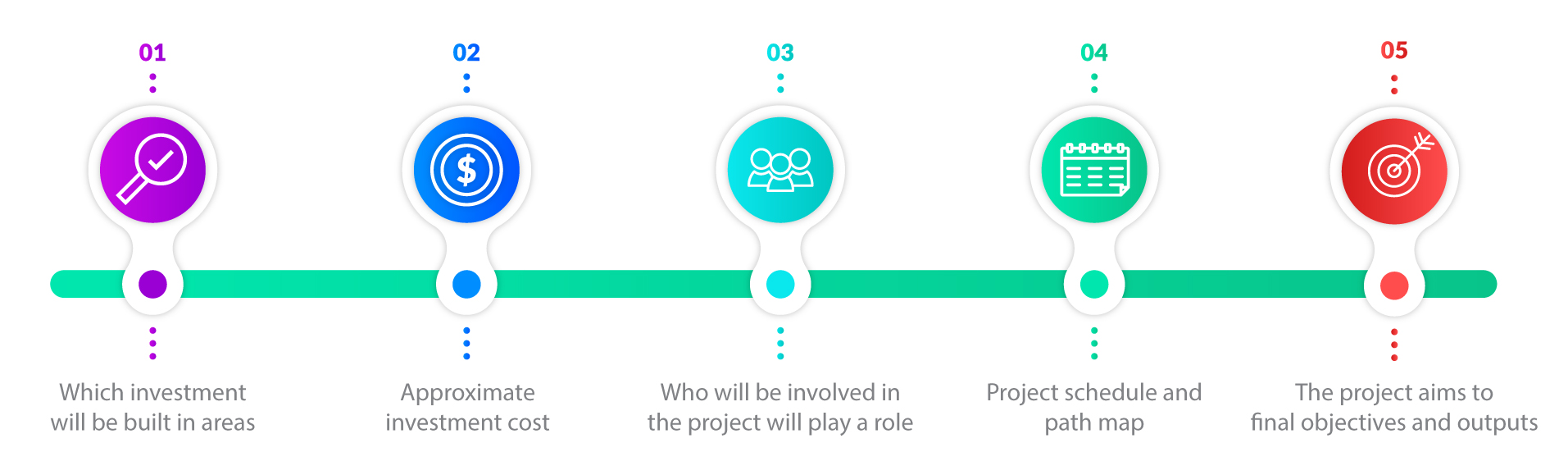
- To ensure that an informative report, which includes the following details, is drawn up for submission while making investment, project and improvement proposals to the Board of Directors:
We are considering providing incentives to our employees within 2 years as a result of managing critical climate and sustainability issues and achieving the goals.
The incentive (and deterrent) mechanism will initially be implemented within the scope of the risk and opportunity strategic task force, the sustainability committee, and its sub-working group members. Subsequently, incentive practices will be extended to all employees. Reward systems will be used as incentive mechanisms in coordination with Human Resources functions, while deterrent mechanisms such as suspension and restriction will be applied as deterrents.
For committee members who perform well in climate change prevention and adaptation efforts, rewards, project fund management and feasibility support, consultancy service procurement increases, and performance incentives defined in the system will be planned. For committee members who do not meet performance expectations in climate action, deterrent measures such as removal from the committee and related working groups, and periodic reductions in budget items are considered. To encourage behavioral change, an internal project/application competition is planned as a rewarding activity. Award mechanisms will include writing articles, participating in scientific meetings, and representing the company in congresses and events organized by international organizations, with the right to present.
After 2 years, based on the sustainability and climate change mitigation and adaptation performance included in the balanced scorecards for processes and units, long- and short-term incentive plans will be introduced for process owners, including progression in their levels and managerial positions, as well as success bonuses in various amounts under maximum reward schemes. The level progress will be implemented by the Human Resources Unit, incorporated into the performance system, and the incentive process will be carried out with approval and oversight from the Board of Directors and the Sustainability Committee Chairperson.